


Read & Rise Qaidah: Madinah and South Asian Script (Compatible with Kiitab Pen)
About The Book
- Graded levels that take your child step by step from the alphabet all the way to reciting the Quran with tajweed.
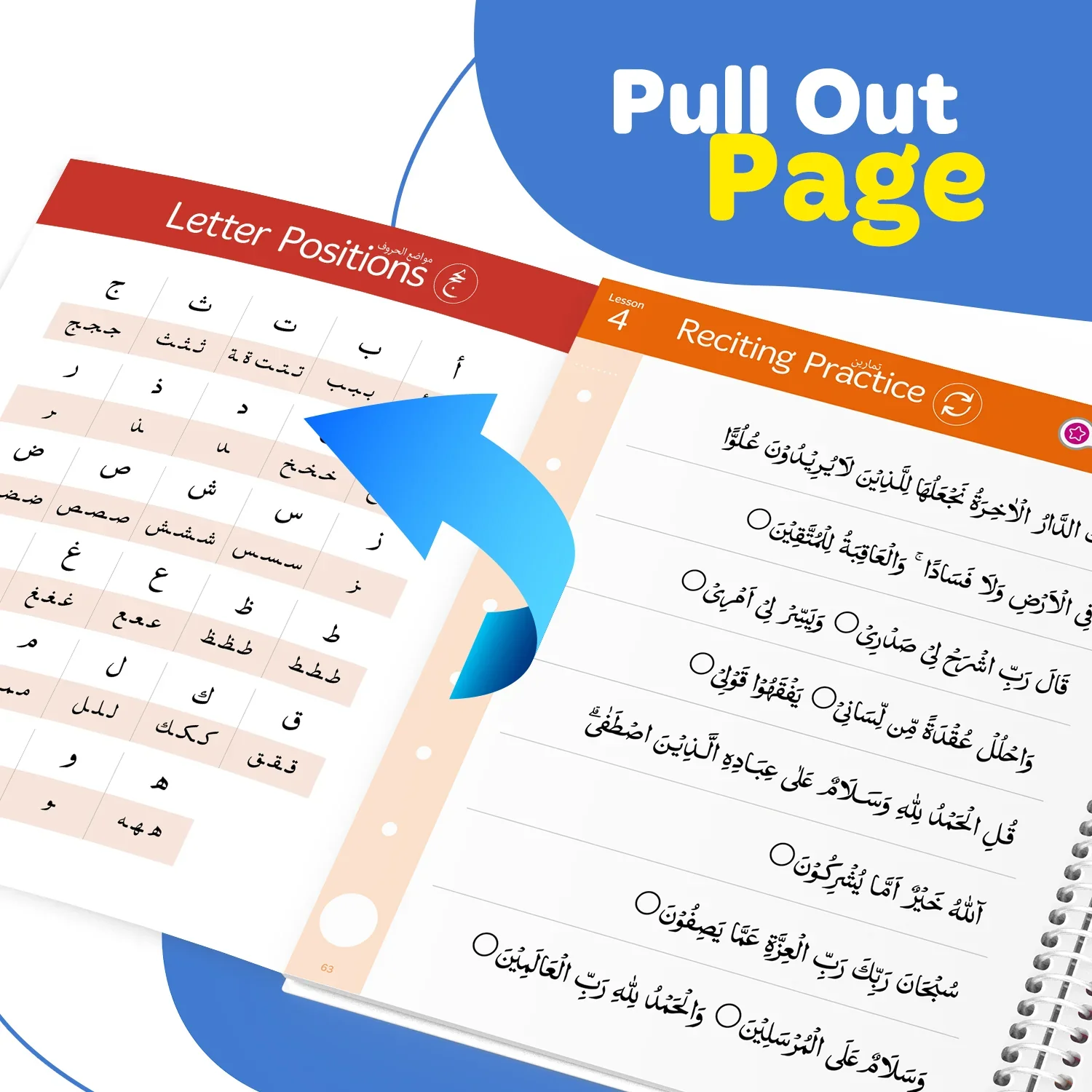
- A fold-out reference page to speed up reading progress by having the different letter positions always at hand to view.
- Motivational hadith about learning the Quran so your child can connect with the deeper purpose of reciting the Quran.
- A spacious clean layout makes the content accessible, easy and friendly for children to read.
Features
- Hardback spiral bound book - lays flat
- 48 pages
- Recommended age 4+
- Size: 209mm x 231mm
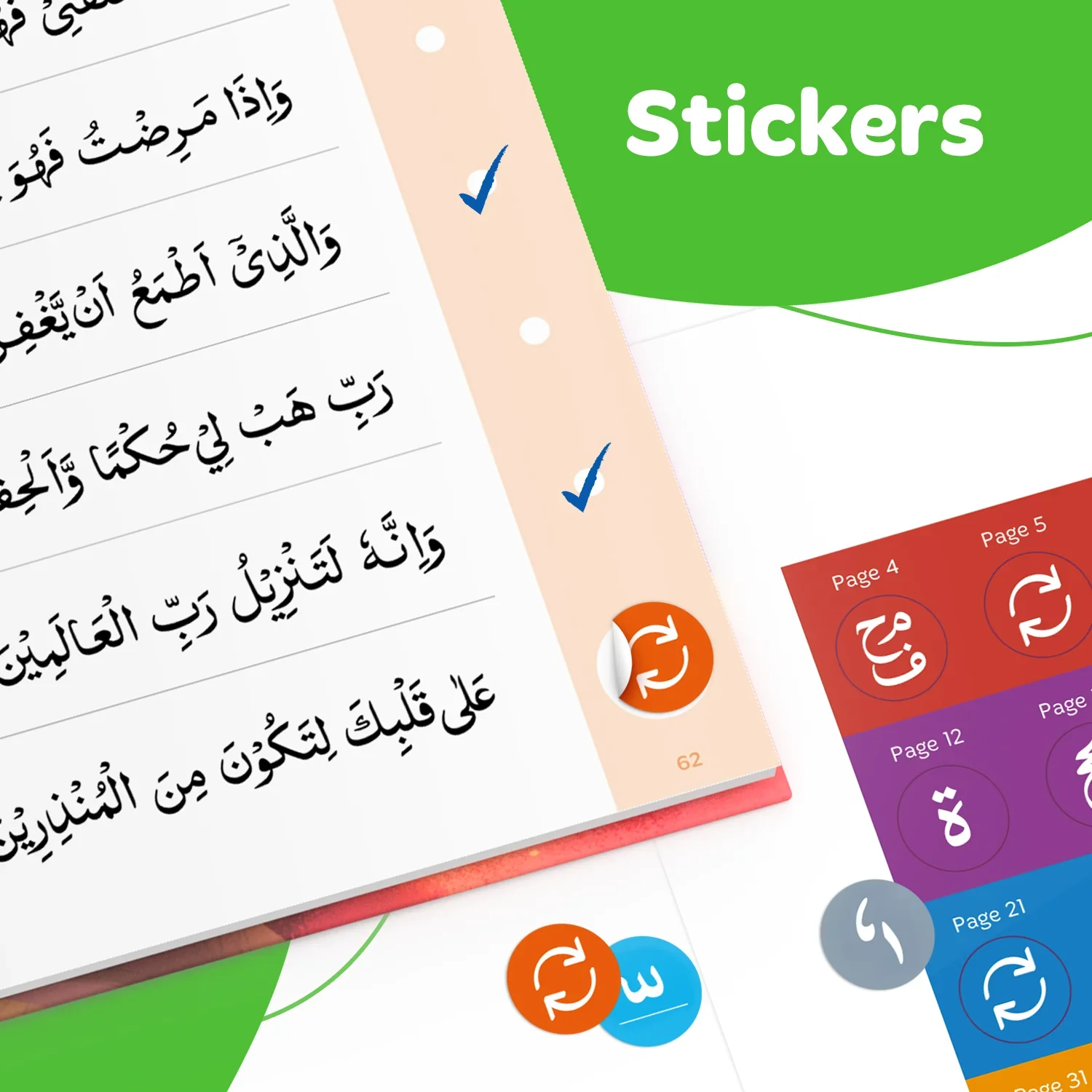
- Motivational stickers
Which Quranic script is right for you? Madinah or South Asian?
In this short article, we’ll explore the differences between the Madinah (Uthmani) script and the South Asian (Indo-Pak or Majeedi) script of the Quran.
Why are there different Quranic scripts, and what are their differences?
Firstly, ALL scripts produce EXACTLY THE SAME results in terms of final pronunciation. Think of scripts as different styles of calligraphy or fonts. Except it’s not just the design of letters that is different; each script also uses a different system to show how words are pronounced.
There are many Quranic scripts available around the world, but two of the most popular are the Madinah script and the South Asian script.


Here’s how to choose between them for your child:
Step 1. Ask your child’s madrasah or Quran teacher which script they teach from, and select that one.
Step 2. If your child does not have a Quran teacher yet, and you have no clear personal preference, select the predominantly used script in your community. For example, if you reside in a largely South Asian Muslim community, then select the South Asian script.
Step 3. Suppose neither of the above two steps leads to a clear recommendation. In that case, we suggest you select the Madinah script, because it’s used more universally in the Ummah. It’s also a lot more uniform, with each page ending in an ayah and each Juz being exactly 20 pages long.
Does the Madinah script version of the Read & Rise Qaidah differ from the South Asian script version?
The majority of both versions cover almost the same content. The main exception is the Hamzatul Wasl and Silent Sounds chapter, where both scripts differ in how they present such sounds. Other than that, there are minor differences in other chapters, including the Tajweed sections.
Conclusion
In summary, the differences between the Uthmani and South Asian scripts of the Quran primarily revolve around calligraphic styles. The pronunciation and content remain identical in both scripts. Each script has unique attributes, making the choice a matter of personal preference and individual needs. Ultimately, the goal is to connect with the Quran’s teachings, regardless of the chosen script.
Product Information
Product Information
Shipping & Returns
Shipping & Returns
Description
About The Book
- Graded levels that take your child step by step from the alphabet all the way to reciting the Quran with tajweed.
- A fold-out reference page to speed up reading progress by having the different letter positions always at hand to view.
- Motivational hadith about learning the Quran so your child can connect with the deeper purpose of reciting the Quran.
- A spacious clean layout makes the content accessible, easy and friendly for children to read.
Features
- Hardback spiral bound book - lays flat
- 48 pages
- Recommended age 4+
- Size: 209mm x 231mm
- Motivational stickers
Which Quranic script is right for you? Madinah or South Asian?
In this short article, we’ll explore the differences between the Madinah (Uthmani) script and the South Asian (Indo-Pak or Majeedi) script of the Quran.
Why are there different Quranic scripts, and what are their differences?
Firstly, ALL scripts produce EXACTLY THE SAME results in terms of final pronunciation. Think of scripts as different styles of calligraphy or fonts. Except it’s not just the design of letters that is different; each script also uses a different system to show how words are pronounced.
There are many Quranic scripts available around the world, but two of the most popular are the Madinah script and the South Asian script.
Here’s how to choose between them for your child:
Step 1. Ask your child’s madrasah or Quran teacher which script they teach from, and select that one.
Step 2. If your child does not have a Quran teacher yet, and you have no clear personal preference, select the predominantly used script in your community. For example, if you reside in a largely South Asian Muslim community, then select the South Asian script.
Step 3. Suppose neither of the above two steps leads to a clear recommendation. In that case, we suggest you select the Madinah script, because it’s used more universally in the Ummah. It’s also a lot more uniform, with each page ending in an ayah and each Juz being exactly 20 pages long.
Does the Madinah script version of the Read & Rise Qaidah differ from the South Asian script version?
The majority of both versions cover almost the same content. The main exception is the Hamzatul Wasl and Silent Sounds chapter, where both scripts differ in how they present such sounds. Other than that, there are minor differences in other chapters, including the Tajweed sections.
Conclusion
In summary, the differences between the Uthmani and South Asian scripts of the Quran primarily revolve around calligraphic styles. The pronunciation and content remain identical in both scripts. Each script has unique attributes, making the choice a matter of personal preference and individual needs. Ultimately, the goal is to connect with the Quran’s teachings, regardless of the chosen script.