Imam Sha‘rani’s Code of Companionship: A Treatise on Exemplary Conduct and Ethics
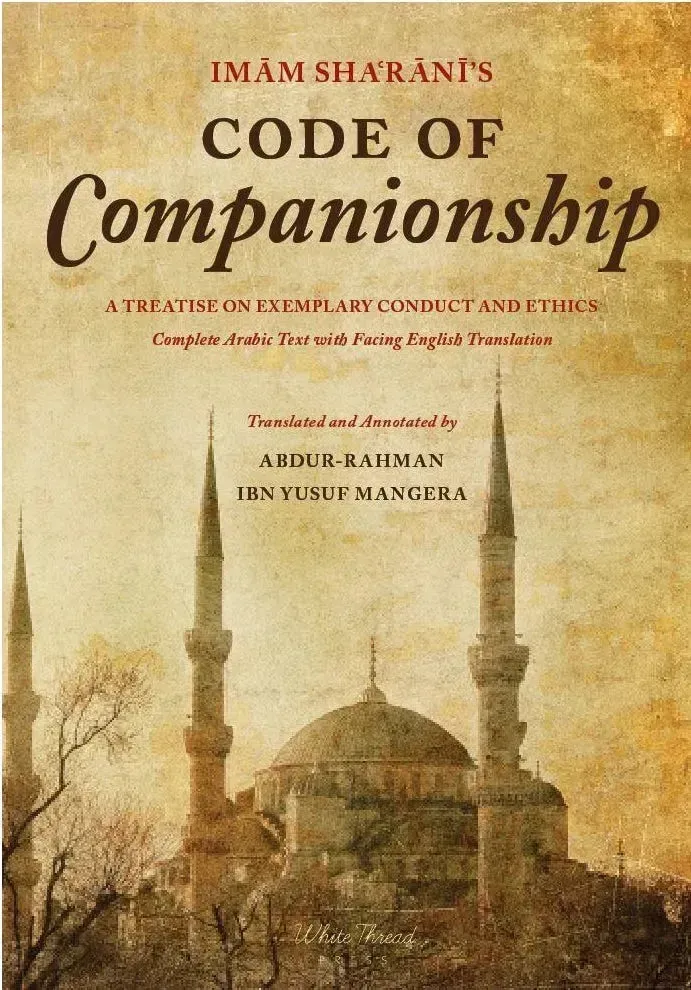
Imam Sha'rani's *Code of Companionship* is a treatise on something we rarely slow down to study: how to be a good companion to the people Allah has placed in our lives. Drawing together insights from the Noble Qur'an, the Sunna, and the words of Islamic scholars, the book examines the weight of our responsibilities toward others and what virtuous companionship actually asks of us in practice.
This bilingual edition of *Adab al-Suhba* makes the original accessible to readers moving between the Arabic and its English rendering, which suits how the work is meant to be used: read closely, discussed, and returned to. It's written in a way that serves an imam preparing a khutba as readily as a parent looking for something to study with their children, or a student encountering the subject in a college classroom.
What stays with you is the practicality of it. This isn't abstract ethics — it's a guide to the everyday conduct of friendship, family, and community, grounded in revelation and the scholarly tradition rather than in modern self-help language. For anyone building a small library on character and adab, it belongs alongside the classics of the genre.
Product Information
Product Information
Shipping & Returns
Shipping & Returns
Description
Imam Sha'rani's *Code of Companionship* is a treatise on something we rarely slow down to study: how to be a good companion to the people Allah has placed in our lives. Drawing together insights from the Noble Qur'an, the Sunna, and the words of Islamic scholars, the book examines the weight of our responsibilities toward others and what virtuous companionship actually asks of us in practice.
This bilingual edition of *Adab al-Suhba* makes the original accessible to readers moving between the Arabic and its English rendering, which suits how the work is meant to be used: read closely, discussed, and returned to. It's written in a way that serves an imam preparing a khutba as readily as a parent looking for something to study with their children, or a student encountering the subject in a college classroom.
What stays with you is the practicality of it. This isn't abstract ethics — it's a guide to the everyday conduct of friendship, family, and community, grounded in revelation and the scholarly tradition rather than in modern self-help language. For anyone building a small library on character and adab, it belongs alongside the classics of the genre.